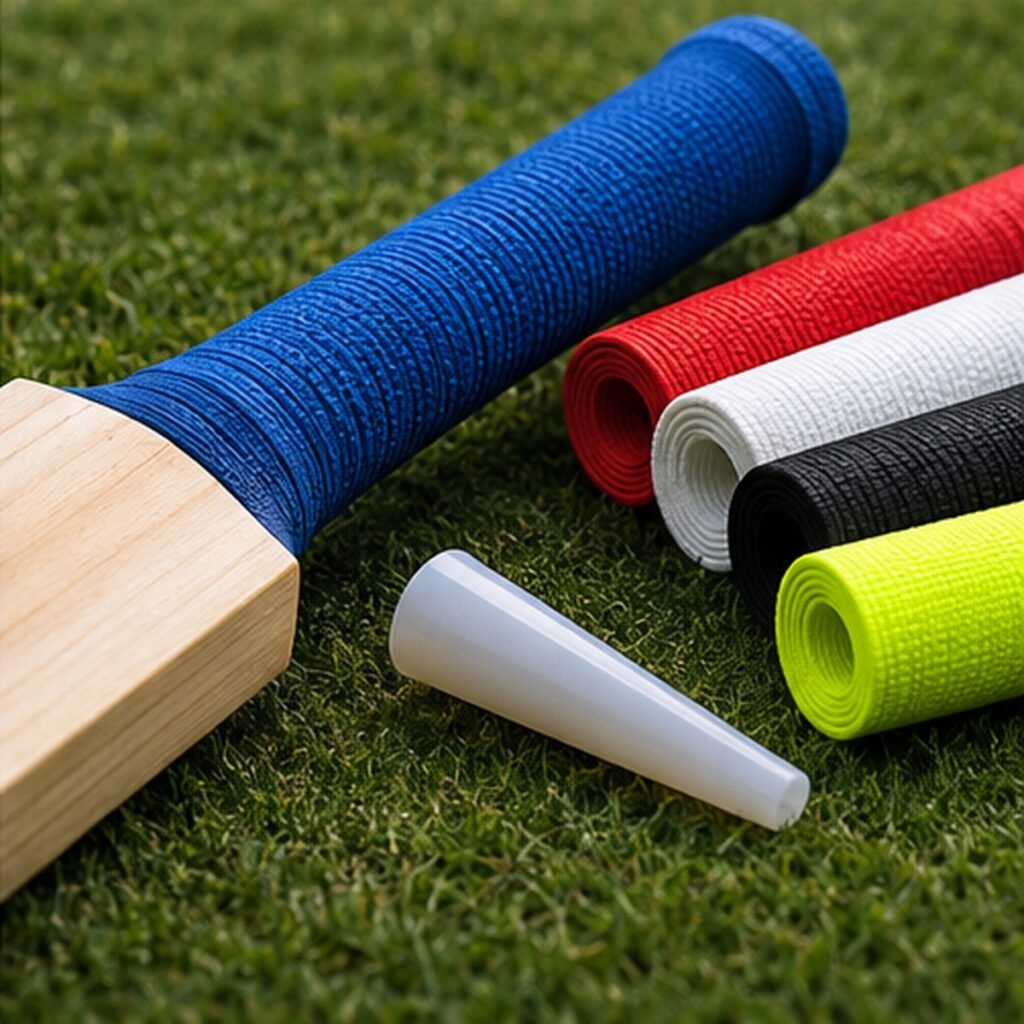
A cricket bat grip affects how securely and comfortably you hold the handle. A grip that is too thin, too thick, worn or poorly fitted can make the bat feel uncomfortable and may affect control. The right grip should feel secure without forcing you to squeeze the handle tightly.
This guide explains common cricket bat grip types, how to choose thickness and how to replace a worn grip using a grip cone or fitting tool. Always check the bat manufacturer’s instructions and use a grip that fits the handle properly.
Quick answer: which cricket bat grip should you choose?
| Grip type | General feel | What to consider |
|---|---|---|
| Chevron or ribbed grip | Raised pattern for tactile feedback | Check that the ridges feel comfortable in your hands |
| Octopus-style grip | Textured, segmented surface | Can offer a pronounced feel; personal preference matters |
| Herringbone or patterned grip | Directional texture | Choose a pattern that feels secure without irritating the hands |
| Plain or smooth grip | More uniform surface | May suit players who prefer less pronounced texture |
Names and patterns vary between manufacturers. Grip material, rubber compound, texture and actual thickness can differ even when two products use the same style name.
1. Common types of cricket bat grips
Chevron grips
Chevron grips have a repeating angled or V-shaped pattern. Players may like the defined texture and tactile feedback. Check the orientation and feel in your hands; the pattern should not create uncomfortable pressure points.
Octopus grips
Octopus-style grips use a more pronounced textured pattern. They can feel secure to players who prefer a noticeable surface under the fingers. The raised texture is not ideal for everyone, so try one before replacing a grip across all your bats.
Herringbone and other patterned grips
These grips use repeating patterns to create a textured contact surface. The exact design differs by brand. Focus on comfort, grip security and whether the surface feels consistent when you rotate the handle in your hands.
Plain or lightly textured grips
Some players prefer a more uniform grip with less pronounced ridges. A smoother surface may feel familiar, but it should still provide enough friction for a secure hold. Replace it if it becomes slick, cracked or stretched.
2. How thick should a cricket bat grip be?
There is no universal grip thickness for every player. The correct feel depends on hand size, handle shape, existing grip layers and personal preference. A thicker grip can make the handle feel fuller, while a thinner grip can preserve a narrower feel and more direct contact with the handle.
Do not add multiple layers simply to make the handle feel bigger. Extra layers can change the handle circumference, affect the way the bat sits in your hands and make the grip uneven. If you are unsure, start with one correctly fitted grip and assess the feel before making changes.
3. When should you replace a cricket bat grip?
- The surface has become smooth, slippery or shiny from use.
- The rubber is cracked, torn or breaking apart.
- The grip has stretched, twisted or started moving on the handle.
- There are loose sections or exposed areas of the handle.
- The grip has become uncomfortable or no longer feels secure.
- You notice persistent dirt, sweat or residue that cannot be cleaned effectively.
Do not wait for a grip to come off completely during a match. Check it during routine bat maintenance, especially before important games.
4. How to replace a cricket bat grip
A grip cone makes fitting easier and helps the grip slide onto the handle without excessive stretching. Work slowly and keep the bat stable. If the grip is unusually tight or the handle is damaged, ask a cricket equipment shop to fit it.
What you need
- A replacement cricket bat grip of the correct type and size
- A cricket bat grip cone or suitable fitting tool
- A clean, dry work surface
- Optional grip tape or finishing tape if recommended by the grip maker
Step-by-step fitting method
- Remove the old grip: Carefully slide it off the handle. Avoid cutting into or damaging the handle beneath it.
- Inspect the handle: Check for cracks, loose binding or damage. A damaged handle should be assessed before a new grip is fitted.
- Prepare the new grip: Check which end is designed to go toward the shoulder and follow any instructions supplied with the grip.
- Use the cone: Fit the grip over the cone, then position the cone at the base of the handle.
- Roll the grip on: Work the grip from the cone onto the handle gradually. Avoid twisting or stretching it unevenly.
- Align the pattern: Smooth the grip and check that it sits evenly without folds or bulges.
- Check the fit: Hold the bat in your normal stance and confirm that the grip does not move and feels comfortable.
Do not use oil, solvents, sharp tools or excessive force to make a grip fit. If the grip will not slide on properly, check the size and fitting instructions or have a shop install it.
5. One grip or two: should you add an extra layer?
Some players use two grips to increase the handle’s circumference or change its feel. This is a personal preference, not a universal improvement. Additional layers can make the handle too thick, alter the grip shape and reduce the feel of the handle for players with smaller hands.
If you want a thicker handle, test the change in practice before using it in a match. Make sure the finished grip is secure, even and comfortable. Do not use extra layers to hide a damaged handle.
6. How to maintain your cricket bat grip
- Keep the handle and grip dry between sessions.
- Wipe away surface dirt with a lightly damp cloth when appropriate, then allow it to dry fully.
- Avoid leaving the bat in direct sunlight or extreme heat for long periods.
- Do not use harsh chemicals or solvents on the grip.
- Check for movement, tears and wear before each match.
- Replace the grip when it no longer provides a comfortable, secure hold.
Frequently asked questions
Which cricket bat grip is best?
There is no single best grip. Chevron, octopus, herringbone and smoother patterns offer different textures. Choose one that feels secure and comfortable in your hands and does not create pressure points.
Can I replace a cricket bat grip at home?
Yes. A grip cone makes the job easier. Remove the old grip carefully, inspect the handle, and slide the new grip on evenly. If the handle is damaged or the grip will not fit, use a cricket equipment shop.
How often should I change my cricket bat grip?
There is no fixed replacement interval. Change it when it becomes slippery, cracked, loose, torn or uncomfortable. Playing frequency, sweat, weather and storage conditions affect how quickly a grip wears out.
Can I use two grips on a cricket bat?
Some players do, mainly to increase handle thickness. It can make the handle too bulky for others. Test the feel in practice and ensure the grip remains secure and even.
Final verdict: choose comfort and a secure fit
A good cricket bat grip should feel secure without requiring excessive hand pressure. Choose the texture and thickness that suit your hands, replace worn grips promptly and use a grip cone to fit a new one evenly. A comfortable grip is a small equipment detail that can make a difference to how confidently you hold the bat.
For more bat-buying advice, explore our guides to cricket bat weight, cricket bat sizing and English willow bats.
